Radiographic Cardiac Indices in Avian Orders: A Narrative Review
Keywords:
Keywords: Birds, Cardiac index, Heart size, Radiography.Abstract
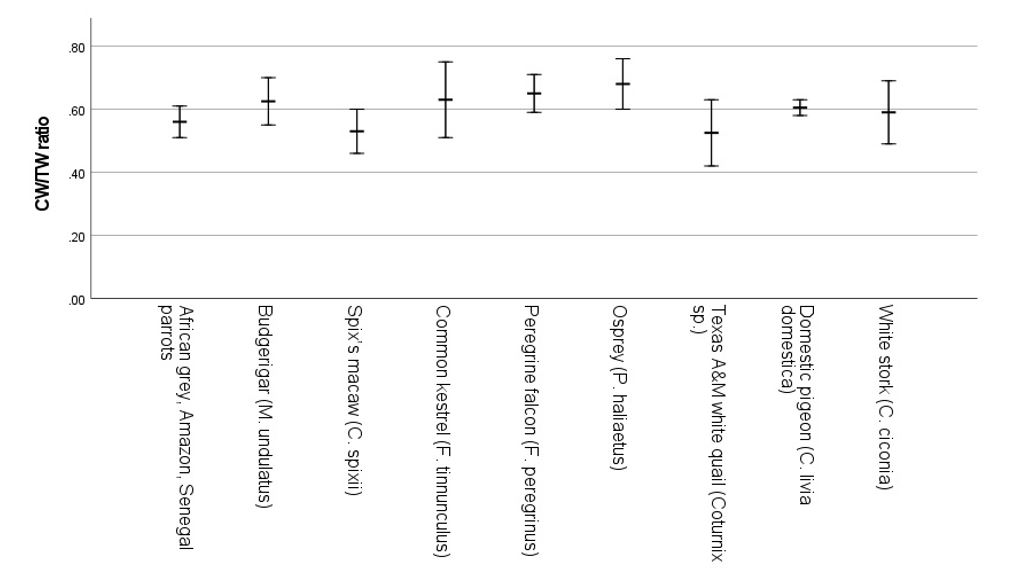
Radiographic evaluation of cardiac size is a cornerstone of avian diagnostics, providing an accessible and objective approach for detecting cardiomegaly, congestive heart failure, and related conditions such as pulmonary hypertension syndrome (ascites). This narrative review synthesizes and critically evaluates published studies on radiographic cardiac indices across a broad range of avian taxa, including Psittaciformes, Accipitriformes, Falconiformes, Galliformes, Columbiformes, Anseriformes, Sphenisciformes, Ciconiiformes, Piciformes, and Passeriformes. Commonly reported indices include the cardiac width-to-thoracic width ratio, cardiac width-to-sternal width ratio, and ratios relating the cardiac silhouette to additional thoracic skeletal landmarks, including coracoid width and intercostal or clavicular distances. Data derived from studies on clinically healthy birds establish species-specific reference ranges, most frequently clustering between 0.50 and 0.60. In contrast, pathological reports consistently describe deviations from these ranges, including cardiac silhouette elongation and partial or complete loss of the cardiac waists in cases of cardiomegaly. Across avian orders, substantial interspecific anatomical variation, sensitivity to radiographic positioning and respiratory phase, and limited sample sizes, particularly in wild or non-companion species, represent major sources of variability. By consolidating radiographic cardiac indices across diverse avian groups, this review underscores the lack of universally applicable diagnostic thresholds. It emphasizes the necessity of species- and method-specific interpretation for accurate clinical decision-making. Furthermore, it highlights the need for future standardization of radiographic measurement protocols and their integration with complementary imaging modalities.
Downloads

Downloads
Published
Issue
Section
License
Copyright (c) 2026 mohammadjavad jahedi, Hemad Shafiei (Author); Mohammadreza Esmailinejad (Corresponding Author)

This work is licensed under a Creative Commons Attribution-NonCommercial 4.0 International License.