Serological, Biochemical and Pathological Changes of Newcastle Disease Virus in Commercial Vaccinated Broiler Chickens
Keywords:
: Newcastle Disease virus, chicken, antibody, biochemical examination, pathologicalAbstract
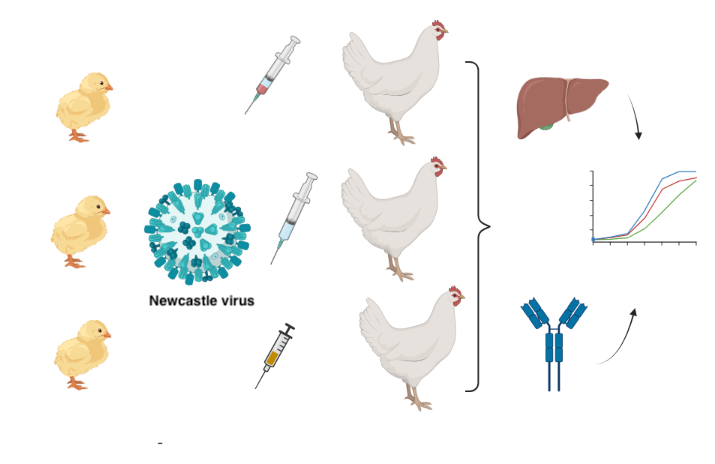
Newcastle disease virus is a globally dispersed virus that infects nearly every bird species, both wild and domestic. It belongs to the genus Orthoavulavirus, subfamily Avulavirinae, family Paramyxoviridae. In chickens, respiratory infection symptoms can range from mild to severe. The disease causes problems with the respiratory system, the digestive tract, and the neurological system, and it is known to cause a high rate of death. Vaccination, along with biosecurity measures and monitoring systems, is recommended as a comprehensive strategy for managing avian diseases. This experiment examined serological, biochemical, and histopathological changes in different commercial Newcastle disease vaccination programs in broiler chickens. The average titers of maternal-derived antibodies targeting Newcastle disease virus were 15315.6 ± 498.64 and showed a consistent reduction across all groups. Post-vaccination ELISA antibody titers differed considerably among groups (P≤ 0.05). Program-1 showed the strongest antibody response (10076 ± 420.36), and Program-3 a close second (9603 ± 489.26); both differed significantly (P≤ 0.0001) from the PBS control group (576.8 ± 142.45). Program-2 caused a slight but substantial antibody rise (1428.6 ± 247.80; P≤ 0.05). Serum biochemical examination showed no significant changes (P ≥ 0.05) in total protein and globulin levels among groups. Albumin levels differed significantly (P ≤ 0.05), with Program-2 showing the highest values (1.24 g/dL) and Program-3 the lowest (1.002 g/dL) compared with the PBS control. At day 35, Program-1 and Program-2 demonstrated normal hepatic portal regions, cords, sinusoids, tracheal mucosa, and cartilage, indicating superior safety. In contrast, Program-3 caused hepatic central vein congestion, sinusoidal congestion, vacuolar abnormalities, mild tracheitis with leukocytic infiltration, and mucosal thickening. Among the tested programs, Program 1 induced the highest ELISA antibody titers and was not associated with evident liver or tracheal lesions in the sections examined. Further challenge and field studies are required to confirm protective efficacy and practical superiority.
Downloads

Published
Issue
Section
License
Copyright (c) 2026 Karrar Ali Mohammed Hasan Alsakini (Corresponding Author)

This work is licensed under a Creative Commons Attribution-NonCommercial 4.0 International License.