β₂-adrenergic dependency of apelin-13-induced hypophagia in the neonatal broiler chicken
Keywords:
Apelin-13, Anorexia, β₂-adrenoceptor, Broiler chicken, Food intake, Adrenergic receptorsAbstract
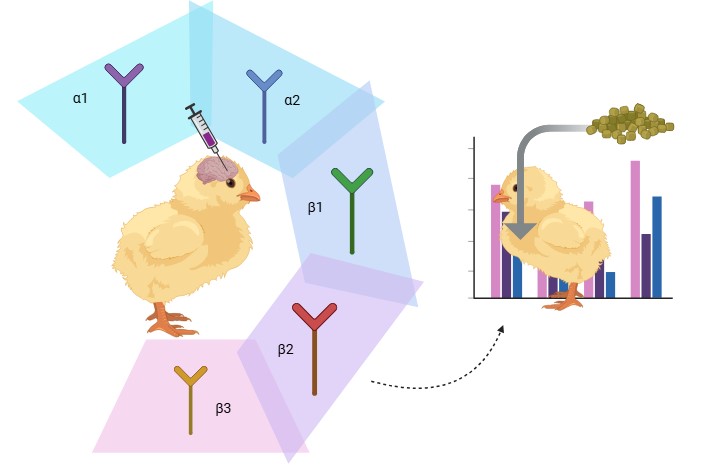
Apelin-13, a bioactive peptide acting via the G protein-coupled receptor APJ, has recently emerged as a potential anorexigenic factor in vertebrates. However, the central neural pathways recruited by apelin-13 to suppress appetite in birds remain largely elusive. This study investigated the involvement of central adrenergic receptor subtypes (α₁, α₂, β₁, β₂, and β₃) in apelin-13-induced hypophagia in neonatal broiler chicks. In a series of six experiments, 3-hour food-deprived Ross 308 chicks (n=11 per group) received intracerebroventricular (ICV) injections of apelin-13 (0.25, 0.5, or 1 µg) alone or in combination with selective adrenergic antagonists (prazosin, yohimbine, metoprolol, ICI 118,551, or SR 59230R). Post‑injection food intake (30, 60, 120 min) was measured and expressed as % body weight. Apelin-13 significantly reduced cumulative food intake in a dose-dependent manner, demonstrating a hypophagic effect (P < 0.05). Co-infusion of the selective β₂-adrenergic antagonist ICI 118,551 completely blocked apelin-13-induced hypophagia at all time points (P < 0.05). In contrast, antagonists of α₁, α₂, β₁, and β₃ receptors failed to alter apelin-13's anorexigenic action (P ≥ 0.05). The present study demonstrates that central administration of apelin-13 exerts a dose-dependent hypophagic effect in neonatal broiler chicks, which is specifically mediated by β₂-adrenergic receptors.
.
Downloads

Published
Issue
Section
License
Copyright (c) 2026 Hamed Zarei, Morteza Zendehdel, Maryam Firouzi , Keyvan Hasani (Author)

This work is licensed under a Creative Commons Attribution-NonCommercial 4.0 International License.