Escherichia Fergusonii in Poultry: A Scoping Review of Occurrence, Antimicrobial Resistance, Pathogenic Potential, and One Health Relevance
Keywords:
Antimicrobial resistance, Escherichia fergusonii, One Health, pathogenicity, poultryAbstract
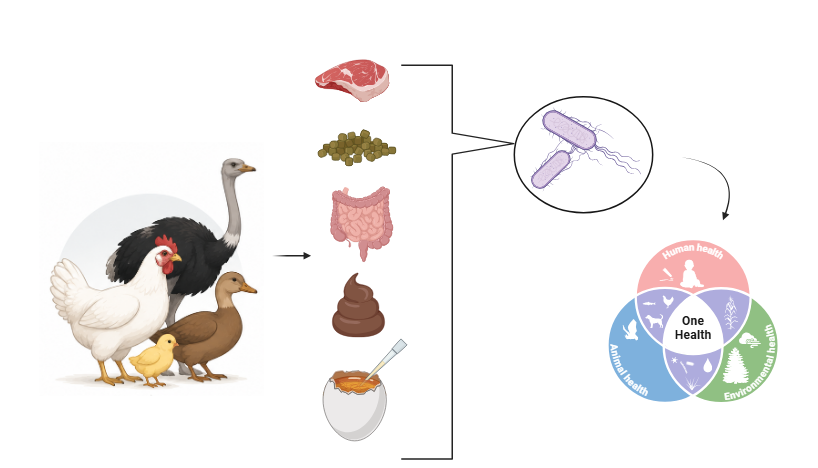
Escherichia fergusonii is a close relative of Escherichia coli that is increasingly detected in poultry, yet its veterinary and public-health significance remains poorly defined. This scoping review mapped evidence concerning its occurrence, identification, pathogenicity, antimicrobial resistance, genomic characteristics, ecological functions, and One Health relevance in poultry. PubMed and Scopus were searched from inception to 20 July 2026. Two reviewers independently screened records and extracted data, with disagreements resolved by consensus. Of 89 records identified, 31 duplicates were removed, 58 unique records were screened, 40 full texts were assessed, and 34 studies were included. Escherichia. fergusonii was reported in healthy broilers and layers, ducks, diseased ostriches, retail chicken meat, manure, eggshells, and other poultry-associated sources. Species-specific PCR and whole-genome sequencing indicated that conventional biochemical systems may underestimate occurrence. Most isolates were recovered from apparently healthy birds. In contrast, clinical and experimental evidence supported strain-dependent pathogenicity, including fibrino-necrotic typhlitis in ostriches and mortality following experimental challenge with a broiler-derived strain. Antimicrobial resistance was the most consistent concern. Poultry-associated isolates carried mcr-1, blaNDM-5, tet(X4), extended-spectrum β-lactamase genes, plasmid-mediated quinolone-resistance determinants, integrons, insertion sequences, and diverse conjugative plasmids. Viable, resistant, and enterotoxin-positive isolates were also recovered from retail chicken meat. Ecological studies suggested roles in nutrient competition, environmental persistence, and cecal ammonia production. The evidence identifies E. fergusonii as an underrecognized poultry-associated organism with limited but credible pathogenic potential and a documented capacity to harbor and transfer clinically important mobile antimicrobial-resistance elements. Standardized molecular surveillance, plasmid-resolved genomics, representative farm-to-food sampling, and natural-route pathogenicity studies are needed to define its veterinary and One Health importance.
Downloads

Published
Issue
Section
License
Copyright (c) 2026 Seyed Mostafa Peighambari (Corresponding Author); Mohammad Barari (Author)

This work is licensed under a Creative Commons Attribution-NonCommercial 4.0 International License.