Multidrug-Resistant Fluoroquinolone Resistance Genes and ESBL -Producing Escherichia coli and Salmonella sp. in a Broiler Breeder Farm in Ibadan: A Case Report
Keywords:
Poultry, Antimicrobial Resistance, ESBL, Fluoroquinolones, Escherichia coli, Salmonella spAbstract
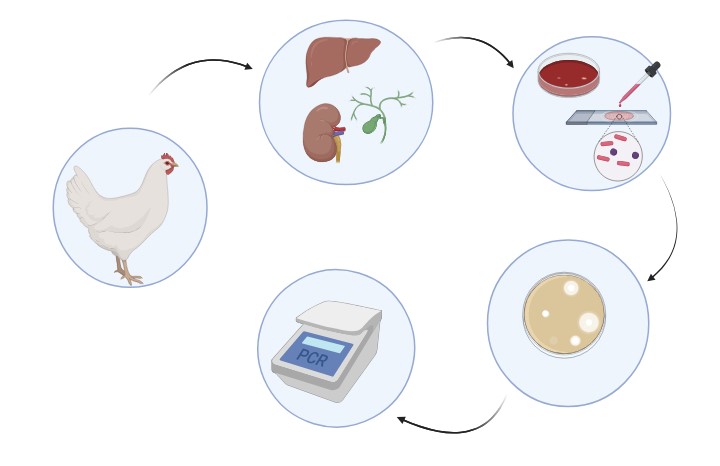
The poultry industry is a critical reservoir of antimicrobial-resistant bacteria, with Escherichia coli and Salmonella sp. as major disease-causing organisms that disseminate high-priority resistance genes into the food chain. This case report details the molecular detection and characterization of plasmid-mediated quinolone resistance (PMQR), carbapenemase, and extended-spectrum β-lactamase (ESBL) genes in isolates of multidrug-resistant E. coli and Salmonella sp. obtained from a broiler breeder farm in Ibadan, Oyo State, Nigeria. Post-mortem examination was conducted on 12 broiler breeders presenting with septicemia. One representative Escherichia coli isolate and one Salmonella sp. isolate from pooled liver, kidney, and gallbladder samples with obvious gross post-mortem lesions were identified based on colony morphology on differential media (MacConkey agar), Gram’s reaction, and biochemical tests using the Analytical Profile Index. The isolates were tested for susceptibility to antibacterial agents with the Kirby-Bauer method. The isolates were also screened for ESBL (blaSHV, blaTEM, blaOXA-1, blaCTX-M), carbapenemase (blaNDM, blaKPC, blaIMP), and PMQR (qnrA, qnrB, qnrS) genes using PCR. The E. coli and Salmonella sp. isolates were resistant to all 12 tested antibiotics across six classes. The E. coli isolate had the blaTEM, blaOXA-1, blaNDM, qnrA, and qnrS genes; the Salmonella sp. isolate carried blaOXA-1 and qnrS. This report confirms that poultry serve as a reservoir for bacteria co-harboring critical ESBL, carbapenemase, and PMQR genes, thereby exhibiting severe multidrug resistance. The findings point to a serious public health concern and underscore the need for improved antimicrobial stewardship and surveillance in the food animal industries.
Downloads

Downloads
Published
Issue
Section
License
Copyright (c) 2026 Oluwaseun Olanrewaju Esan (Author); Foluke Olajumoke Jemilehin (Corresponding Author); Adelekan Oluseyi Okunlade, Veronica Eyihuri Adetunji, Temitayo Ayodeji Esho-Oluborode, Temitope Olaotan Olodun (Author)

This work is licensed under a Creative Commons Attribution-NonCommercial 4.0 International License.