Comparative Histopathology and Immunogenicity of two Commercially Available Infectious Bronchitis GI-13 Vaccine Strains in Broiler Chickens
Keywords:
Infectious bronchitis virus, GI-13, 793/B-like vaccine, ELISA, real-time RT-PCRAbstract
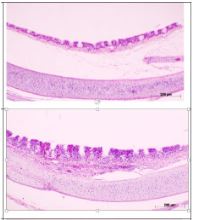
Vaccine development is a lengthy process, and safety and efficacy studies are crucial before and after a vaccine's commercial use. The aim of this study was to evaluate the immunogenicity and histopathological effects of two commercially produced Infectious Bronchitis vaccines from the GI-13 lineage in young chickens. Seventy-five broiler chickens were divided into three groups of 25 (groups 1-3). At 21 days of age, the chickens were vaccinated through the ocular route. The first two groups were vaccinated against IB, while the last group served as the control group and remained unvaccinated. Using ELISA, the humoral immune response, as measured by antibodies, was assessed 3 weeks post-vaccination. Five days after vaccine administration, histopathology of the trachea and kidney was examined in vaccinated and control group chickens, and real-time PCR was performed to determine the RNA virus load in tracheal swabs. The results confirmed that both vaccines elicited serum antibody responses of 0.2618±0.1358 (Mean OD±Standard Deviation) in the first group and 0.2789±0.1164 in the second group, both of which were higher than those of the control group. Despite some variations between them, the difference was not statistically significant (p>0.05). However, the 793/B-like vaccine in group 2 had much higher histopathological lesion scores in the kidney (Group 1: 2.600±0.8944 and 3.800±0.4472 for Group 2) and the trachea (Group 1 scored a mean of 1.800±0.4472, while the second group scored a higher mean of 2.800±0.8367) (p<0.05), indicating that different vaccines may cause varying changes in the microscopic structure of tissues. Real-time RT-PCR analysis with 24 and 24.42 CT values for the first and second vaccinated groups, respectively, revealed no preference for vaccine strains, indicating similar viral loads. In conclusion, these findings suggest that both vaccines are immunogenic and, despite potentially having the same replication rate, one vaccine may be safer, causing less damage to target tissues in chickens. This means that choosing the right vaccine is important for controlling poultry diseases and managing poultry health.
Downloads
References
Abdel-Sabour, M. A., Rohaim, M. A., Salman, O. J. A., Abodalal, S. E., Mohammad, F. F., Madkour, M. S., Abdel-Wanis, N. A., & Munir, M. (2021). Immunogenicity and efficacy of a bivalent vaccine against infectious bronchitis virus. Comp Immunol Microbiol Infect Dis, 77, 101670. https://doi.org/10.1016/j.cimid.2021.101670
Almayahi, W. M., Ali kraidi, Q., Saeed Abbas, S., & Abbas, B. A. (2022). Molecular Detection and Histopathological Effect of Infectious Bronchitis Virus Circulating in Vaccinated Broiler Flocks in Basrah, Iraq [Original Research]. Iranian Journal of War and Public Health, 14(3), 339-345. http://ijwph.ir/article-1-1119-en.html
Awad, F., Hutton, S., Forrester, A., Baylis, M., & Ganapathy, K. (2016). Heterologous live infectious bronchitis virus vaccination in day-old commercial broiler chicks: clinical signs, ciliary health, immune responses and protection against variant infectious bronchitis viruses. Avian Pathol, 45(2), 169-177. https://doi.org/10.1080/03079457.2015.1137866
Barari, M., Khorrami, S., Mortazavi, S., Bahonar, A., & Charkhkar, S. (2024). Comparative histopathology of three Serotypes of live infectious bronchitis vaccine (IB88 – 4/91 – H120) in broiler chickens. Journal of Poultry Sciences and Avian Diseases, 2, 9-18. https://doi.org/10.61838/kman.jpsad.2.4.2
Benyeda, Z., Szeredi, L., Mató, T., Süveges, T., Balka, G., Abonyi-Tóth, Z., Rusvai, M., & Palya, V. (2010). Comparative histopathology and immunohistochemistry of QX-like, Massachusetts and 793/B serotypes of infectious bronchitis virus infection in chickens. J Comp Pathol, 143(4), 276-283. https://doi.org/10.1016/j.jcpa.2010.04.007
Callison, S. A., Hilt, D. A., Boynton, T. O., Sample, B. F., Robison, R., Swayne, D. E., & Jackwood, M. W. (2006). Development and evaluation of a real-time Taqman RT-PCR assay for the detection of infectious bronchitis virus from infected chickens. J Virol Methods, 138(1-2), 60-65. https://doi.org/10.1016/j.jviromet.2006.07.018
Chousalkar, K. K., Cheetham, B. F., & Roberts, J. R. (2009). Effects of infectious bronchitis virus vaccine on the oviduct of hens. Vaccine, 27(10), 1485-1489. https://doi.org/10.1016/j.vaccine.2009.01.012
Eid, A. A. M., Mahmoud, A. M., Hamouda, E. E., Metwally, M., Ezz-Eldin, R. M. M., & ElBakrey, R. M. (2024). The efficacy of simultaneous successive classic and variant infectious bronchitis virus vaccines versus circulating variant II Egyptian field virus. Open Vet J, 14(1), 90-107. https://doi.org/10.5455/OVJ.2024.v14.i1.9
Ghetas, A., Bosila, M., Rabie, N., & Abdelbaki, M. (2025). The Effect of Infectious Bronchitis Virus Vaccine on Pathogenicity of Aavian Pathogenic E. coli in Broiler Chickens. Egyptian Journal of Veterinary Sciences, 56, 1053-1060. https://doi.org/10.21608/ejvs.2024.278543.1952
Jackwood, M. W., Jordan, B. J., Roh, H. J., Hilt, D. A., & Williams, S. M. (2015). Evaluating Protection Against Infectious Bronchitis Virus by Clinical Signs, Ciliostasis, Challenge Virus Detection, and Histopathology. Avian Dis, 59(3), 368-374. https://doi.org/10.1637/11026-012415-Reg.1
Jeurissen, S. H., Boonstra-Blom, A. G., Al-Garib, S. O., Hartog, L., & Koch, G. (2000). Defence mechanisms against viral infection in poultry: a review. Vet Q, 22(4), 204-208. https://doi.org/10.1080/01652176.2000.9695059
Kilany, W. H., Zain El-Abideen, M. A., Hisham, I., Van Gaver, D., Makahleh, A., Christiaens, I., Vlerick, L., & Elkady, M. F. (2025). Laboratory safety and immunogenicity evaluation of live attenuated avian infectious bronchitis GI-23 virus vaccine. Vaccine, 45, 126659. https://doi.org/10.1016/j.vaccine.2024.126659
Lee, C. W., Brown, C., Hilt, D. A., & Jackwood, M. W. (2004). Nephropathogenesis of chickens experimentally infected with various strains of infectious bronchitis virus. J Vet Med Sci, 66(7), 835-840. https://doi.org/10.1292/jvms.66.835
Masoudi, S., Pishraft-Sabet, L., & Shahsavadi, S. (2020). Immunogenicity and Efficacy of Live Infectious Bronchitis 793/B.08IR Vaccine in SPF Chickens. Archives of Razi Institute, 75, 23-30. https://doi.org/10.22092/ari.2019.124720.1286
Motamed, N., Beshashati, M., & Fallah, m. h. (2021). Molecular detection of Infectious Bronchitis virus in broiler chicken flocks. New Findings in Veterinary Microbiology, 3(2), 118-126. https://doi.org/10.22034/nfvm.2021.139269
Nemr, A., Hamad, R., El-Shemy, A., Abdelkhalek, A., & Mohamed, M. (2025). Pathological, Immunohistochemical, and Molecular Study of Avian Infectious Bronchitis Virus in Egypt. Egyptian Journal of Veterinary Sciences, 56, 79-89. https://doi.org/10.21608/ejvs.2024.264572.1798
Sjaak de Wit, J. J., Cook, J. K., & van der Heijden, H. M. (2011). Infectious bronchitis virus variants: a review of the history, current situation and control measures. Avian Pathol, 40(3), 223-235. https://doi.org/10.1080/03079457.2011.566260
Sultan, H. A., Ali, A., El Feil, W. K., Bazid, A. H. I., Zain El-Abideen, M. A., & Kilany, W. H. (2019). Protective Efficacy of Different Live Attenuated Infectious Bronchitis Virus Vaccination Regimes Against Challenge With IBV Variant-2 Circulating in the Middle East. Front Vet Sci, 6, 341. https://doi.org/10.3389/fvets.2019.00341
Terregino, C., Toffan, A., Beato, M. S., De Nardi, R., Vascellari, M., Meini, A., Ortali, G., Mancin, M., & Capua, I. (2008). Pathogenicity of a QX strain of infectious bronchitis virus in specific pathogen free and commercial broiler chickens, and evaluation of protection induced by a vaccination programme based on the Ma5 and 4/91 serotypes. Avian Pathol, 37(5), 487-493. https://doi.org/10.1080/03079450802356938

Downloads
Published
Issue
Section
License
Copyright (c) 2026 Hossein Hoseini, Zahra Ziafati Kafi, Alireza Bakhshi, Fahimeh Jamiri, Soroush Sarmadi, Najmeh Motamed, Nazanin Sarvan, Ali Niazi, Sepehr Salimi, Ali Shahamatifard (Author); Arash GhalyanchiLangeroudi (Corresponding Author)

This work is licensed under a Creative Commons Attribution-NonCommercial 4.0 International License.